
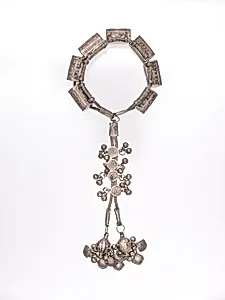
Armlet
Unknown Artist
18th–19th century
Medium
Silver
Classification
Jewelry
Department
Islamic Art
Museum
Metropolitan Museum of Art, New York, NY
Credit
Edward C. Moore Collection, Bequest of Edward C. Moore, 1891
Accession Number
91.1.1137
Rights
Public Domain
Art Historical Context
This exquisite silver armlet, to the 18th–19th century,ails from the rich tradition of Islamic jewelry-making, where such pieces served as both personal adornments and symbols of. Crafted from silver—a metal prized for its malleability and luster in the Islamic world—armlets like this were typically worn on the upper arm by women during ceremonies, weddings, or daily life, enhancing grace and conveying prosperity. The unknown artisan's work reflects the era's masterful metalworking techniques, likely involving hammering, chasing, or engraving to create intricate designs that evoked cultural motifs of flora, geometry, or protective symbols. In the broader context of Islamic art, jewelry bridged utility and artistry, often incorporating regional influences from the Ottoman Empire, Persia, or North Africa. Silver armlets were accessible to a wider social spectrum than gold, democratizing opulence while showcasing technical virtuosity. This example entered the Metropolitan Museum of Art through the Edward C. Moore Collection, bequest of 1891, a treasure trove of global decorative arts that highlights Moore's passion for exquisite craftsmanship. Step into the shimmering world of Islamic elegance with this armlet, a timeless testament to beauty and heritage. (198 words)