
Armor
16th century and later
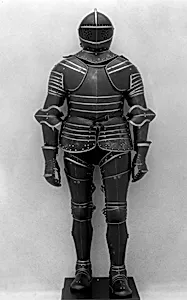
Medium
Steel, brass, leather
Dimensions
Wt. 41 lb. 9 oz. (18.85 kg); Wt. of helmet 10 lb. 8 oz. (4.75 kg)
Classification
Armor for Man
Culture
German
Department
Arms and Armor
Museum
Metropolitan Museum of Art, New York, NY
Credit
Gift of William H. Riggs, 1913
Accession Number
14.25.702
Rights
Public Domain
Art Historical Context
This magnificent suit of armor, crafted by the skilled German armorer Hans Michel the 16th century later refined, exemplifies the pinnacle of Renaissance-era metalworking. Made from steel, brass, and leather it was designed for a man, weighing a formidable 41 pounds 9 ounces (18.85 kg) total, with the helmet alone tipping the scales at 10 pounds 8 (4.75 kg). Displayed in the Metropolitan Museum of Art's Arms Armor Department, it entered the collection as a gift from William. Riggs in 1913. In 16th-century Germany, such armor represented both battlefield necessity and status symbol, protecting knights during the wars of the Reformation era and lavish tournaments. Hans Michel's work highlights the technical mastery of Augsburg or Nuremberg armorers, who hammered steel into articulated plates for full mobility while etching decorative brass elements for aesthetic appeal. The leather components provided flexible joints, underscoring the blend of functionality and artistry. Step closer to feel its imposing presence—this isn't just protection, but a wearable sculpture born of ingenuity, reminding us of the human endurance behind chivalric legends.