
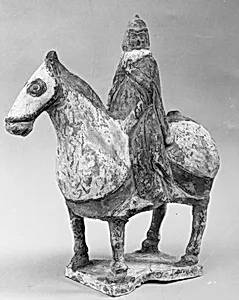
北魏 彩繪陶重鎧騎兵俑|Armored horse and rider
Unknown Artist
6th century
Medium
Earthenware with pigment
Dimensions
H. 8 1/4 in. (21 cm); L. 7 1/2 in. (19.1 cm)
Classification
Tomb Pottery
Culture & Period
China · Northern Wei dynasty (386-534)
Department
Asian Art
Museum
Metropolitan Museum of Art, New York, NY
Credit
Rogers Fund, 1920
Accession Number
20.39.2
Rights
Public Domain
Tags
Art Historical Context
This exquisite armored horse and rider figurine, crafted in the 6th century during China's Northern Wei dynasty (386534 CE), captures the era's military might and nomadic influences. The Northern Wei, ruled by the Xianbei people of steppe origins, blended Central Asian cavalry traditions with Chinese artistry, evident in the heavy lamellar armor adorning both rider and steed. Standing just 8¼ inches tall, this tomb pottery (mingqi) was placed in burials to serve and protect the deceased in the, reflecting beliefs in an eternal journey equipped with loyal guardians. Made of low-fired earthenware and vividly painted with mineral pigments—now softened by time—the figurine showcases masterful techniques in modeling dynamic poses and intricate details like scale armor, flowing saddlecloths, and alert expressions. Such painted ceramics were mass-produced yet personalized, highlighting the dynasty's advancements in kiln technology and color application for lifelike realism. As a Rogers Fund acquisition at the Metropolitan Museum of Art, this piece illuminates Northern Wei society's warrior culture and the fusion of Han Chinese tomb customs with steppe equestrian prowess, offering visitors a tangible glimpse into ancient China's vibrant, multicultural world.