
Armorial Jug (boccale)
Unknown Artist
ca. 1470–80
Medium
Maiolica (tin-glazed earthenware)
Dimensions
H. 14 13/16 in. (37.6 cm)
Classification
Ceramics-Pottery
Culture
Italian, Florence or vicinity
Department
Robert Lehman Collection
Museum
Metropolitan Museum of Art, New York, NY
Credit
Robert Lehman Collection, 1975
Accession Number
1975.1.1067
Rights
Public Domain
Tags
Art Historical Context
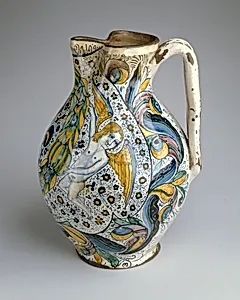
This elegant Armorial Jug, or *boccale*, hails from Florence or its vicinity around 1470–80, crafted in maiolica—tin-glazed earthenware that the height of Italian ceramic innovation during the Renaissance. Standing at nearly 15 inches tall, this jug features heraldic motifs, likely family coats of arms, adorned with playful putti (chubby, winged cherubs symbolizing joy and abundance). These decorative elements reflect the era's blend of utility and opulence, as such vessels served wine or water at grand tables while flaunting social status. Maiolica's brilliance stems from its technique: a porous earthenware body coated in opaque tin glaze, hand-painted with metallic oxides in vivid blues, yellows, and greens, then fired to fuse the colors permanently. Florentine workshops excelled in this method, rivaling metalwork and imported luxuries like Chinese porcelain. The jug's robust form and intricate designs highlight the city's thriving pottery trade, fueled by patronage from wealthy merchants and nobility. Today, housed in the Robert Lehman Collection at The Metropolitan Museum of Art, this piece offers a window into Quattrocento daily life—where art elevated the everyday. Imagine it gracing a Renaissance banquet, putti dancing amid noble emblems, a testament to Florence's cultural golden age.