
Armorial tondo
15th–16th century
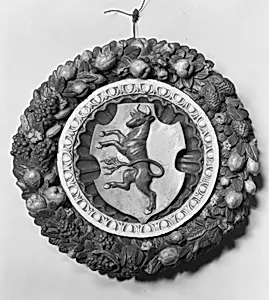
Medium
Painted and glazed terracotta
Dimensions
Diameter: 27 in. (68.6 cm)
Classification
Sculpture
Culture
Italian, Florence
Department
European Sculpture and Decorative Arts
Museum
Metropolitan Museum of Art, New York, NY
Credit
Bequest of George Blumenthal, 1941
Accession Number
41.190.43
Rights
Public Domain
Tags
Art Historical Context
Nestled in the vibrant tradition of Renaissance Florence, Giovanni della Rob's *Armorial tondo* (15th–16th century is a stunning circular plaque of painted and glazed terracotta measuring 27 inches in diameter. Crafted a master of the renowned Della Rob workshop—founded by his uncle Luca—this roundel showcases heraldic motifs, including majestic at its center, encircled by lush garlands of fruits, flowers, and leaves. These reflect the Florentine love for opulent decoration, blending family crests with nature's bounty. The medium of glazed terracotta was revolutionary, with its tin-based enamel firing technique producing brilliant, weather-resistant colors that mimicked painting while offering sculptural depth. Giovanni elevated this family specialty, creating pieces for palaces, churches, and gardens that brought three-dimensional vibrancy to architecture. This tondo likely served as an overdoor or wall emblem, symbolizing prestige and piety. Today, housed in the Metropolitan Museum of Art's European Sculpture and Decorative Arts department (Bequest of George Blumenthal, 1941), it captures the Della Robbias' enduring legacy: fusing artistry, heraldry, and botanic realism in a timeless Renaissance jewel.