
Medium
Wool and silk
Dimensions
H. 12 x W. 8 in. (approx.) (30.5 x 20.3 cm)
Classification
Textiles-Tapestries
Culture
French, Beauvais
Department
European Sculpture and Decorative Arts
Museum
Metropolitan Museum of Art, New York, NY
Credit
Gift of John D. Rockefeller Jr., 1935
Accession Number
35.145.17d
Rights
Public Domain
Art Historical Context
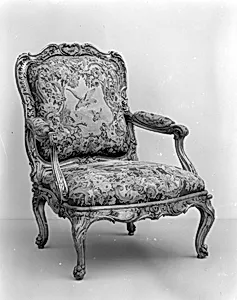
This exquisite armrest, crafted between 1754 and 1756 at the renowned Beauvais tapestry manufactory France, exemplifies the opulence of mid-18th-century Rococo decorative arts. Designed by Jean-Baptiste Oudry a master painter and director of Beauvais, with possible collaboration from weaver André Charlemagne Char, it is woven from luxurious wool and silk. Measuring just 12 x 8 inches, this petite textile was likely intended as a protective and ornamental cover for furniture armrests, blending functionality with artistic splendor in aristocratic interiors. Oudry's influence shines through in the intricate weave, characteristic of Beauvais's high-warp technique, which allowed for fine detail and vibrant colors. As a leader in French tapestry production, Oudry drew from nature and hunting motifs, elevating decorative objects to high art during Louis XV's reign—a golden age for Versailles-inspired luxury. Wool provided durability, while silk added sheen and depth, making such pieces coveted status symbols. A generous gift to the Metropolitan Museum of Art from John D. Rockefeller Jr. in 1935, this armrest offers a glimpse into the craftsmanship of pre-Revolutionary France, where tapestries were not mere fabric but woven narratives of elegance and refinement.
About the Artist
Jean-Baptiste Oudry|Jean-Baptiste Oudry|Beauvais|André Charlemagne Charron · 1686–1755
Comment on works: Fish; Game; Dogs; Hunt scenes