
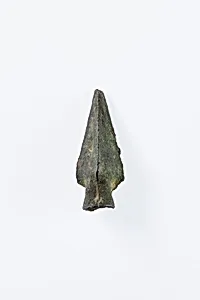
Arrow point, Apries
Unknown Artist
589–570 B.C.
Medium
Bronze or copper alloy
Dimensions
L. 2.6 × W. 1 cm (1 × 3/8 in.)
Classification
Arrow point, Apries
Period
Late Period
Department
Egyptian Art
Museum
Metropolitan Museum of Art, New York, NY
Credit
Gift of The Egyptian Research Account and British School of Archaeology in Egypt, 1909
Accession Number
09.183.4.11
Rights
Public Domain
Art Historical Context
This delicate bronze or copper alloy arrow point, just 2.6 cm long, hails from Egypt's Late Period during Dynasty 26 (589–570 B.C.), the reign of Pharaoh Apries (also known as Hophra Discovered and gifted to the Metropolitan Museum Art in 1909 by the Egyptian Account and British School of in Egypt, it exemplifies the precision craftsmanship of ancient Egyptian metalworkers. Apries ruled from Sais in the Nile Delta, a time when Egypt sought to revive the grandeur of earlier dynasties while facing external pressures from Nubia, Libya, and the rising powers of the Near East. This arrowhead likely equipped the pharaoh's archers during military campaigns, such as his ill-fated expedition against Cyrene in Libya around 570 B.C., underscoring the era's reliance on archery as a key battlefield tactic. Crafted through lost-wax casting or hammering techniques, the point's slender, barbed design optimized penetration and retrieval, reflecting advanced metallurgical skills in alloying copper for durability. As a humble yet vital artifact, it offers a window into the martial culture of Saite Egypt, where such weapons symbolized pharaonic power amid political turbulence.