
Arrowhead
Unknown Artist
ca. 480–330 BCE
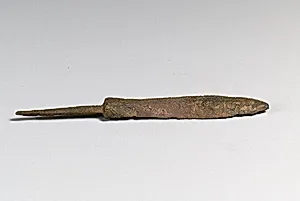
Medium
Bronze
Dimensions
Other: 2 3/4in. (7cm)
Classification
Bronzes
Culture & Period
Greek, Cypriot · Classical
Department
Greek and Roman Art
Museum
Metropolitan Museum of Art, New York, NY
Credit
The Cesnola Collection, Purchased by subscription, 1874–76
Accession Number
74.51.5342
Rights
Public Domain
Art Historical Context
This slender bronze arrowhead, crafted around 480–330 BCE by an unknown Cypriot artisan during the Classical Greek period, offers a glimpse into the martial world of ancient Cyprus. Measuring just 2¾ inches (7 cm), it exemplifies the island's renowned bronzeworking tradition, where functional weapons doubled as testaments to skilled metallurgy. Cyprus, at the crossroads of Greek, Near Eastern, and Egyptian influences, produced bronzes prized for their durability and precision, often cast using lost-wax techniques that allowed intricate detailing. In the Classical era, such arrowheads armed warriors in hoplite phalanxes or skirmishes, reflecting evolving warfare tactics amid Greece's golden age of philosophy and democracy. Though utilitarian, its survival highlights the cultural reverence for craftsmanship—bronze, an alloy of copper and tin, symbolized status and technological prowess in Cypriot society. Acquired as part of The Cesnola Collection (purchased by subscription, 1874–76), this piece now resides in the Metropolitan Museum of Art's Greek and Roman Art department. It invites visitors to ponder the everyday heroism of ancient fighters, bridging the gap between artifact and lived history.