
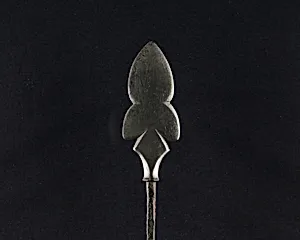
Arrowhead (<i>Yanone</i>)
Unknown Artist
18th century
Medium
Steel
Dimensions
L. 9 1/4 in. (23.5 cm); L. of head 3 1/8 in. (7.9 cm); W. 1 1/4 in. (3.2 cm); Wt. 1.5 oz. (42.5 g)
Classification
Archery Equipment-Arrowheads
Culture
Japanese
Department
Arms and Armor
Museum
Metropolitan Museum of Art, New York, NY
Credit
The Collection of Giovanni P. Morosini, presented by his daughter Giulia, 1932
Accession Number
32.75.413
Rights
Public Domain
Art Historical Context
This exquisite steel arrowhead, known as *yanone*, hails from 18th-century Japan during the Edo period, a time of relative peace when samurai culture emphasized discipline and martial arts like archery (*kyūdō*). Measuring just 9¼ inches long with a 3⅛-inch head, this lightweight yet lethal piece (1.5 oz.) exemplifies the precision engineering of Japanese arms makers. Displayed in the Metropolitan Museum of Art's Arms and Armor Department, it entered the collection in 1932 through the generous gift of Giulia Morosini in honor of her father, Giovanni P. Morosini. *Yanone* arrowheads were far more than mere tools; they were crafted for diverse purposes, from hunting to warfare and even ceremonial signaling, with shapes tailored to penetrate armor or whistle in flight. Japanese smiths forged steel through meticulous folding and hammering techniques, achieving unparalleled sharpness, balance, and durability—skills honed over centuries in the tradition of sword-making. This artifact reflects the artistry in functionality, blending lethal utility with aesthetic refinement. Though the maker remains unknown, the *yanone*'s survival speaks to its cultural prestige, underscoring archery's role in samurai training and bushidō ethos. Visitors, imagine drawing a yumi bow on a misty battlefield—such objects bring Japan's warrior heritage vividly to life.