
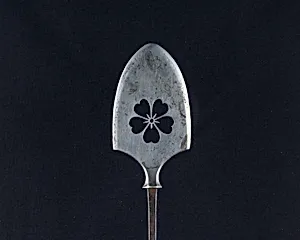
Arrowhead (<i>Yanone</i>)
Unknown Artist
18th century
Medium
Steel
Dimensions
L. 11 in. (27.9 cm); L. of head 3 in. (7.6 cm); W. 1 5/8 in. (4.1 cm); Wt. 1.6 oz. (45.4 g)
Classification
Archery Equipment-Arrowheads
Culture
Japanese
Department
Arms and Armor
Museum
Metropolitan Museum of Art, New York, NY
Credit
The Collection of Giovanni P. Morosini, presented by his daughter Giulia, 1932
Accession Number
32.75.473
Rights
Public Domain
Art Historical Context
This exquisite steel arrowhead, known as *yanone* in Japanese, hails from 18th-century Japan during the Edo period—a time of relative peace under the Tokugawa shogunate, when martial traditions like archery persisted in cultural and ceremonial practices. Measuring 11 inches overall, with a 3-inch head that's 1⅝ inches wide and weighing just 1.6 ounces, its slender, balanced form reflects the precision engineering required for kyūdō (Japanese archery), a discipline blending sport, philosophy, and samurai heritage. Crafted from high-quality steel, this *yanone* exemplifies the metallurgical expertise of Japanese armorers, who forged blades capable of piercing armor or hunting game. While the artist remains unknown, the artifact's refined proportions and lightweight design highlight functional artistry, where form served deadly purpose. Part of the Metropolitan Museum of Art's Arms and Armor collection, it entered via the Giovanni P. Morosini bequest in 1932, offering visitors a tangible link to Japan's warrior past and the elegance of its weaponry.