
Arrowhead (<i>Yanone</i>)
Unknown Artist
18th century
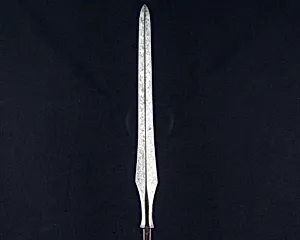
Medium
Steel
Dimensions
L. 13 3/4 in. (34.9 cm); L. of head 7 5/8 in. (19.4 cm); W. 3/4 in. (1.9 cm); Wt. 3.1 oz. (87.9 g)
Classification
Archery Equipment-Arrowheads
Culture
Japanese
Department
Arms and Armor
Museum
Metropolitan Museum of Art, New York, NY
Credit
The Collection of Giovanni P. Morosini, presented by his daughter Giulia, 1932
Accession Number
32.75.510
Rights
Public Domain
Art Historical Context
This exquisite steel arrowhead, known as a *yanone*, hails from 18th-century Japan during the Edo period—a time of relative peace under the Tokugawa shogunate, when martial arts like archery remained central to samurai culture. Measuring 13¾ inches long with a 7⅝-inch head, this slender, lightweight piece (just 3.1 ounces) was designed for deadly accuracy in battle, hunting, or ceremonial practices such as yabusame, the thrilling tradition of mounted archery. Crafted by an unknown master smith, the *yanone* exemplifies Japan's renowned metallurgical prowess. Forged from high-quality steel, its precise dimensions—¾ inch wide at the base—reflect advanced techniques in folding and tempering metal to achieve balance, sharpness, and penetration power. Arrowheads like this were not mere tools but symbols of discipline and artistry, often customized for piercing armor or felling game. Now housed in the Metropolitan Museum of Art's Arms and Armor Department, this piece entered the collection in 1932 as part of Giovanni P. Morosini's gift, presented by his daughter Giulia. It invites visitors to appreciate the blend of utility and elegance in Japanese weaponry, a testament to a warrior ethos enduring centuries.