
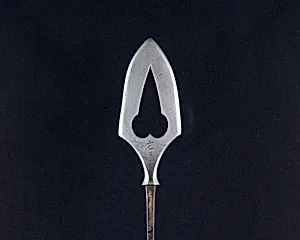
Arrowhead (<i>Yanone</i>)
Unknown Artist
18th century
Medium
Steel
Dimensions
L. 9 1/4 in. (23.5 cm); L. of head 3 1/4 in. (8.3 cm); W. 1 5/16 in. (3.3 cm); Wt. 1.2 oz. (34 g)
Classification
Archery Equipment-Arrowheads
Culture
Japanese
Department
Arms and Armor
Museum
Metropolitan Museum of Art, New York, NY
Credit
The Collection of Giovanni P. Morosini, presented by his daughter Giulia, 1932
Accession Number
32.75.543
Rights
Public Domain
Art Historical Context
This exquisite steel arrowhead, known as *yanone*, hails from 18th-century Japan and exemplifies the masterful metalworking of the Edo period. Measuring just 9¼ inches in total length with a 3¼-inch head, it weighs a mere 1.2 ounces, revealing the precision engineering required for deadly accuracy in archery. Crafted from high-quality steel, the *yanone* was forged to pierce armor or hunt game, showcasing techniques like differential hardening that balanced sharpness with resilience—hallmarks of Japanese bladesmithing. In Japanese culture, archery transcended warfare, embodying the samurai's discipline and the spiritual essence of *kyūdō* (the way of the bow). During the relatively peaceful Edo era, such implements preserved martial traditions amid shifting societal norms. This piece, classified as archery equipment in the Arms and Armor department, highlights how functional objects doubled as art, with arrowheads often customized in shapes like willow leaves or bird feathers for specific tactical roles. Generously donated to the Metropolitan Museum of Art in 1932 from Giovanni P. Morosini's collection, this *yanone* invites visitors to ponder the blend of utility and artistry in Japan's warrior heritage. A testament to anonymous craftsmanship, it weighs lightly yet carries the weight of centuries-old ingenuity.