
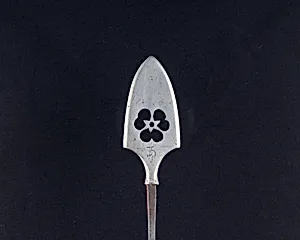
Arrowhead (<i>Yanone</i>)
Unknown Artist
18th century
Medium
Steel
Dimensions
L. 9 1/8 in. (23.2 cm); L. of head 2 3/4 in. (7 cm); W. 1 1/4 in. (3.2 cm); Wt. 1.1 oz. (31.2 g)
Classification
Archery Equipment-Arrowheads
Culture
Japanese
Department
Arms and Armor
Museum
Metropolitan Museum of Art, New York, NY
Credit
The Collection of Giovanni P. Morosini, presented by his daughter Giulia, 1932
Accession Number
32.75.599
Rights
Public Domain
Art Historical Context
This exquisite steel arrowhead, known as a *yanone* in Japanese, hails from 18th-century Japan, a time when archery remained a cornerstone of samurai culture during the peaceful yet tradition-rich Edo period. Measuring just 9 1/8 inches long with a 2 3/4-inch head, this lightweight piece (1.1 oz.) exemplifies the precision engineering required for deadly accuracy in battle, hunting, or ceremonial archery practices like *kyūdō*. Crafted from high-quality steel by an unknown master artisan, its slender form and sharp edges highlight the advanced metallurgical techniques of Japanese bladesmiths, who folded and tempered steel to achieve unparalleled strength and balance. In the context of Japanese arms and armor, *yanone* were more than mere weapons—they were feats of functional artistry. Variations in shape allowed for specialized uses, from piercing armor to whistling through the air for psychological effect, underscoring archery's role in warfare and Zen-like discipline. This example, now in the Metropolitan Museum of Art's Arms and Armor Department, entered the collection through the generous gift of Giovanni P. Morosini, presented by his daughter Giulia in 1932, preserving a slice of feudal Japan's martial heritage for modern admirers.