
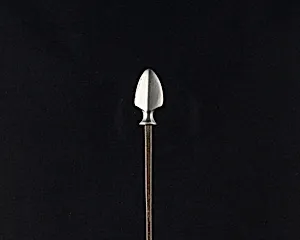
Arrowhead (<i>Yanone</i>)
Unknown Artist
18th century
Medium
Steel
Dimensions
L. 6 3/8 in. (16.2 cm); L. of head 1 1/8 in. (2.9 cm); W. 9/16 in. (1.4 cm); Wt. 0.5 oz. (14.2 g)
Classification
Archery Equipment-Arrowheads
Culture
Japanese
Department
Arms and Armor
Museum
Metropolitan Museum of Art, New York, NY
Credit
The Collection of Giovanni P. Morosini, presented by his daughter Giulia, 1932
Accession Number
32.75.642
Rights
Public Domain
Art Historical Context
This exquisite steel arrowhead, known as *yanone* in Japanese, hails from 18th-century Japan and exemplifies the masterful craftsmanship of the Edo period. Measuring just 6⅜ inches in total length with a slender head of 1⅛ inches wide and weighing a mere 0.5 ounces, its lightweight yet robust design was optimized for long-range archery, allowing arrows to fly swiftly and accurately. Forged from high-quality steel, the *yanone* showcases the precision of traditional Japanese metalworking techniques, where blades were meticulously shaped, tempered, and sharpened to pierce armor or game with deadly efficiency. In Japanese culture, archery was far more than a weapon of war; it was a cornerstone of samurai training, hunting practices, and ceremonial rituals, evolving into the meditative sport of kyūdō. During the relatively peaceful Edo era (1603–1868), such arrowheads reflected lingering martial traditions amid a focus on artistry and refinement. This piece, classified as archery equipment in the Arms and Armor department, highlights how functional objects doubled as expressions of technical virtuosity. Generously gifted to the Metropolitan Museum of Art in 1932 from the collection of Giovanni P. Morosini by his daughter Giulia, this *yanone* invites visitors to appreciate the blend of lethality and beauty in Japanese arms, reminding us of a warrior ethos tempered by elegance.