
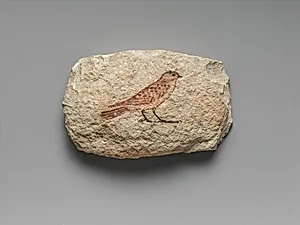
Artist's Sketch of a Sparrow
Unknown Artist
ca. 1479–1458 B.C.
Medium
Limestone, paint
Dimensions
H. 6.6 cm (2 5/8 in.); W. 10.6 cm (4 3/16 in.); Th. 2.4 cm (15/16 in.)
Classification
Ostracon, hieroglyph, sparrow
Period
New Kingdom
Department
Egyptian Art
Museum
Metropolitan Museum of Art, New York, NY
Credit
Rogers Fund, 1923
Accession Number
23.3.7
Rights
Public Domain
Tags
Art Historical Context
This delicate limestone sketch of a sparrow, dating to around 1479–1458 B.C. during Egypt's New Kingdom (Dynasty 18), offers a rare glimpse into the working process of an ancient artist. Created on a small, portable slab—measuring just 6.6 cm high and 10.6 cm wide—this piece likely served as a study for larger tomb paintings or decorative motifs, a common practice among Egyptian artisans honing their skills in naturalistic observation. Carved in low relief and enhanced with traces of paint, the sparrow is rendered with remarkable sensitivity, capturing the bird's alert posture and fine details like feathers and beak. Limestone ostraca like this were everyday tools for draftsmen, who practiced on scraps of stone before committing to grander surfaces such as temple walls or coffin lids. The New Kingdom era, under pharaohs like Hatshepsut and Thutmose III, marked a golden age of artistic innovation, where such sketches bridged technical precision with a deep appreciation for the natural world. Birds held symbolic weight in ancient Egyptian culture, often representing the soul or divine messengers, though the humble sparrow evokes everyday life along the Nile. Acquired through the Rogers Fund in 1923, this unassuming treasure at the Metropolitan Museum of Art reminds us of the artistry behind Egypt's monumental legacy.