
Aschenputtel (Cinderella)
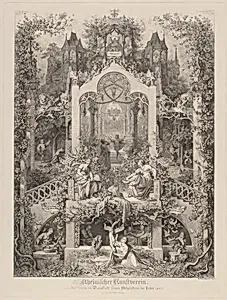
Medium
etching on wove paper
Dimensions
plate: 72 × 54.2 cm (28 3/8 × 21 1/4 in.) sheet: 83.7 × 63.6 cm (33 1/16 × 25 in.)
Classification
Department
CG-E
Museum
National Gallery of Art, Washington, D.C.
Credit
Gift of Ruth Cole Kainen
Accession Number
2012.92.413
Rights
Public Domain
Art Historical Context
Step into the enchanting world of 19th-century German Romanticism with *Aschenputtel (Cella)*, a captivating etching by Eugen Napoleon Neureuther from 1847. Neureuther, a master illustrator of the Brothers Grimm fairy tales, inspiration from the dark, folklore-rich version of Cinderella known as "Aschenputtel in German. This large-scale print (plate: 72 × 54.2 cm) transforms the beloved rags-to-riches tale into visually poetic narrative, blending whimsy with the era's fascination for the supernatural and moral fables. Crafted as an etching on wove paper—a smooth, durable support ideal for intricate details—Neureuther's technique showcases the precision of intaglio printing. Fine lines and tonal gradations evoke the misty, dreamlike atmosphere of Romantic art, evoking emotions through shadowy depths and delicate textures. Produced during a time when fairy-tale illustrations popularized folklore across Europe, this work reflects the growing accessibility of literature through affordable prints. Today, housed in the National Gallery of Art's Department of Prints (CG-E) as a gift from Ruth Cole Kainen, *Aschenputtel* invites visitors to ponder its cultural resonance: a bridge between oral traditions and visual storytelling, reminding us of Cinderella's timeless appeal amid 1840s Germany's cultural renaissance.