
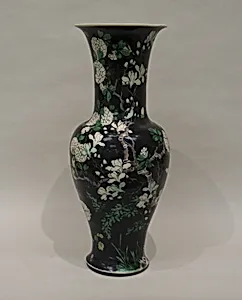
ase with birds and flowers
Unknown Artist
19th century
Medium
Porcelain painted in polychrome enamels over black ground (Jingdezhen ware, famille noire)
Dimensions
H. 27 (68.6 cm); Diam. 11 in. (27.9 cm); Diam. of rim: 9 3/4 in. (24.8 cm); Diam. of foot: 9 1/4 in. (23.5 cm)
Classification
Ceramics
Culture & Period
China · Qing dynasty (1644–1911)
Department
Asian Art
Museum
Metropolitan Museum of Art, New York, NY
Credit
Bequest of Benjamin Altman, 1913
Accession Number
14.40.228
Rights
Public Domain
Tags
Art Historical Context
This stunning porcelain vase, titled *Vase with Birds and*, exemplifies the masterful craftsmanship of 19th-century Jingdez ware from China's Qing dynasty (1644–1911). Standing an impressive 27 inches tall a 11-inch diameter, it features luxurious black ground—known as *famille noire*—adorned with vibrant polychrome enamels depicting birds amid blooming flowers and plants. Produced at Jingdezhen, the world's porcelain capital, such vases were fired at high temperatures to achieve their glassy translucency and durability, then meticulously painted and overglazed for rich, enduring color. The *famille noire* style, popular in the late Qing era, blended traditional Chinese motifs with influences from European export markets, showcasing exotic luxury for elite collectors. Birds and floral designs symbolized harmony, prosperity, and the beauty of nature in Chinese culture, making this piece both decorative and auspicious. Its grand scale suggests it was intended as a statement centerpiece, highlighting the technical virtuosity of anonymous imperial kilns. Bequeathed to the Metropolitan Museum of Art in 1913 by Benjamin Altman, this anonymous masterpiece invites visitors to appreciate the Qing dynasty's porcelain legacy—a fusion of artistry, innovation, and cultural exchange that continues to captivate.