
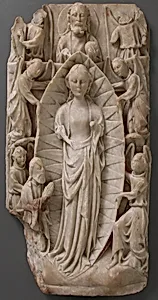
Assumption Of The Virgin
Unknown Artist
14th–15th century
Medium
Alabaster
Dimensions
Overall: 20 1/2 x 10 1/4 x 2 3/4 in. (52.1 x 26 x 7 cm)
Classification
Sculpture-Stone|Sculpture-Alabaster
Culture
British
Department
The Cloisters
Museum
Metropolitan Museum of Art, New York, NY
Credit
The Cloisters Collection, 1955
Accession Number
55.45
Rights
Public Domain
Tags
Art Historical Context
Behold the *Assumption of the Virgin*, a captivating alabaster sculpture from 14th–15th Britain, now gracing The Cloisters at the Metropolitan Museum of Art This devotional work depicts the triumphant moment when the Virgin Mary is lifted into heaven by a host of angels, a central in Christian iconography symbolizing her purity and divine favor. Carved with exquisite detail, the piece captures the ethereal grace of Mary amid swirling angelic figures, evoking the spiritual ecstasy of medieval worship. Alabaster, a soft yet luminous gypsum stone prized by English sculptors, allowed for intricate carving and a subtle translucency that mimics divine light—qualities ideal for religious art. These British alabasters were often part of altarpieces or private chapels, mass-produced in workshops like those in Nottingham, and brightly painted or gilded in their original state (though much color has faded over time). Standing at 20½ x 10¼ x 2¾ inches, its relief format suggests it once adorned a larger ensemble, reflecting the era's booming trade in portable piety across Europe. Housed in The Cloisters Collection since 1955, this anonymous masterpiece offers a window into late medieval devotion, where faith and artistry intertwined to inspire the faithful. A testament to enduring spirituality, it invites you to ponder the heavens captured in stone.