
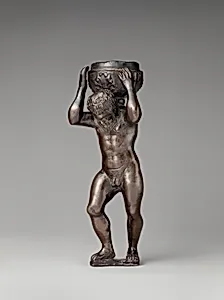
Atlas Supporting a Vessel
mid-16th century
Medium
Bronze
Dimensions
Overall (confirmed): 7 3/8 × 2 3/8 × 2 3/4 in. (18.7 × 6 × 7 cm)
Classification
Sculpture-Bronze
Culture
Italian, probably Ravenna
Department
European Sculpture and Decorative Arts
Museum
Metropolitan Museum of Art, New York, NY
Credit
Gift of Irwin Untermyer, 1971
Accession Number
1971.171
Rights
Public Domain
Tags
Art Historical Context
In the mid-16th century, sculptor Severo Calzet da Ravenna crafted this exquisite bronze sculpture, *Atlas Supporting a Vessel*, the Renaissance fascination with classical mythology. Depicting the Titan Atlas—condemned to hold up the heavens—poised in a dynamic contrapposto stance as a muscular male nude, the figure balances a delicate vessel atop his shoulders. Measuring just 7 3/8 × 2 3/8 × 2 3/4 inches, this intimate tabletop piece was likely designed for private collections, showcasing Severo's mastery of small-scale bronzes popular among Renaissance elites. Severo, active in northern Italy around Ravenna and Fontainebleau, was renowned for his intricate lost-wax casting technique, which allowed for the fine detailing of Atlas's straining muscles, flowing hair, and ornate vessel. This method, rooted in ancient traditions revived during the Renaissance, produced durable, patinated works that captured movement and anatomical precision, blending classical ideals with emerging Mannerist elegance. A gift to the Metropolitan Museum of Art in 1971 from Irwin Untermyer, this sculpture highlights the era's cultural reverence for Greco-Roman myths, symbolizing endurance and the human form's heroic potential. Visitors will appreciate its tactile quality and the subtle play of light on its aged bronze surface, inviting reflection on humanity's eternal burdens.