
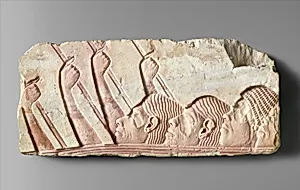
Attendants in a Procession
Unknown Artist
ca. 1353–1336 B.C.
Medium
Limestone, paint
Dimensions
24.1 cm (9 1/2 in); w. 53.5 cm (21 1/16 in)
Classification
Talatat, attendants, foreigners
Period
New Kingdom, Amarna Period
Department
Egyptian Art
Museum
Metropolitan Museum of Art, New York, NY
Credit
Gift of Norbert Schimmel, 1985
Accession Number
1985.328.13
Rights
Public Domain
Tags
Art Historical Context
This limestone relief fragment from the Amarna Period captures attendants moving in a formal procession, their heads and upper bodies preserved with traces of original paint. Created around 1353–1336 B.C. during Egypt’s Dynasty 18, it belongs to the brief but transformative reign of Akhenaten, when traditional artistic conventions gave way to a more naturalistic style. Figures appear with elongated necks and expressive features, reflecting the period’s emphasis on movement and individuality rather than rigid formality. Carved in limestone and once brightly painted, the piece would have formed part of a larger wall scene in a tomb or temple, illustrating the daily rituals and court life surrounding the royal family. The Amarna style broke from centuries of idealized proportions, introducing softer contours and dynamic poses that convey a sense of liveliness and immediacy. Now in the Metropolitan Museum of Art’s collection through the generosity of Norbert Schimmel, this small yet evocative fragment offers visitors a glimpse into one of ancient Egypt’s most revolutionary artistic moments.