
August, from The Twelve Months
c. 1574
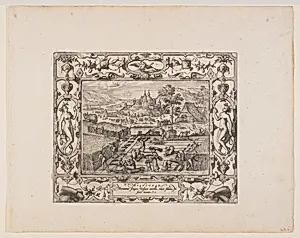
Medium
Etching from two plates on ivory laid paper
Dimensions
Plate: 19.9 × 24.2 cm (7 7/8 × 9 9/16 in.); sheet: 30 × 37.6 cm (11 13/16 × 14 13/16 in.)
Classification
etching
Department
Prints and Drawings
Museum
Art Institute of Chicago
Accession Number
267961
Rights
Public Domain
Art Historical Context
Step into the harvest fields of 16th-century with *August, from The Twelve Months*, an exquisite etching by Pieter van dercht, created around 1574. Van der Borcht, a Flemish engraver from Antwerp, was renowned for his detailed landscapes and genre scenes captured the rhythms of rural life. This print is part of a beloved series depicting the labors of each month, drawing from medieval calendar traditions where seasonal activities symbolized the passage of time and the agricultural cycle. In *August*, viewers glimpse the height of summer bounty, evoking the industrious spirit of peasant communities amid the Dutch Golden Age's early stirrings. Crafted as an etching from two plates on delicate ivory laid paper, the work measures a generous plate size of 19.9 × 24.2 cm, allowing for intricate compositions stitched seamlessly together—a technical feat that expanded the scale and fidelity of printed imagery. Etching, with its fluid lines bitten into metal by acid, offered van der Borcht greater expressiveness than traditional engraving, making fine details like foliage and figures accessible to a wider audience through affordable prints. Housed in the Art Institute of Chicago's Prints and Drawings Department, this piece highlights the cultural role of such series in educating and entertaining during the Renaissance, blending artistry with everyday life. It's a window into a world where art mirrored the earth's generosity, inviting us to appreciate both van der Borcht's mastery and the enduring poetry of the seasons.