
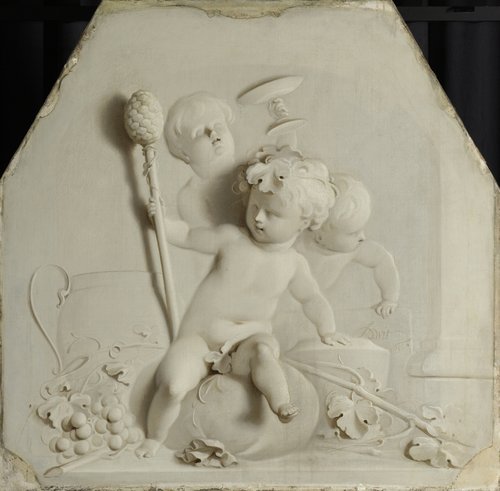
Autumn
1740
Medium
oil on canvas
Dimensions
110.5; 8.6; 109
Rights
Public Domain
About this artwork
drager: hoogte 109 cm (hexagon; onregelmatig) x breedte 110,5 cm
Art Historical Context
**Autumn** by Jacob de Wit (1695–1754) is a captivating oil on canvas painting from 1740, measuring approximately 109 cm high by 110.5 cm wide. Housed in the Rijksmuseum, this nearly square work features an irregular hexagonal support, suggesting it was designed as a decorative overdoor or panel to fit architectural niches in grand Dutch interiors of the era. De Wit, a leading Amsterdam painter, mastered the elegant Rococo style, blending fluid forms and vibrant colors inspired by Rubens and French ornamentation. As an allegory of Autumn, the painting likely evokes the season's bounty—harvests, ripeness, and transition—common in 18th-century European art symbolizing the cycle of life and prosperity. De Wit's technique shines in his luminous oils, creating depth and movement suited for opulent homes or public spaces during the Dutch Republic's refined post-Golden Age culture. This piece exemplifies his skill in seasonal series, bringing poetic harmony to everyday grandeur. (178 words)
About the Artist
Jacob de Wit · 1695–1754
Comment on works: Religious; Allegory; Bas-relief