
Autumn Poem by Lady Kunaikyō
mid-1620s
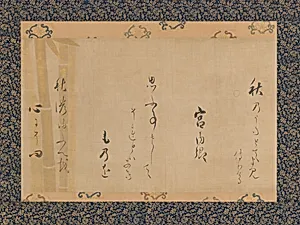
Medium
Section of a handscroll, mounted as a hanging scroll
Dimensions
Image: 12 5/8 x 20 3/4 in. (32.1 x 52.7 cm)
Classification
Calligraphy
Culture & Period
Japan · Edo period (1615–1868)
Department
Asian Art
Museum
Metropolitan Museum of Art, New York, NY
Credit
Gift of Florence and Herbert Irving, 2015
Accession Number
2015.500.9.46
Rights
Public Domain
Tags
Art Historical Context
In the mid-1620s, during Japan's Edo period (1615–1868), master calligrapher Hon'ami Kōetsu and painter Tawaraya Sōtatsu collaborated on exquisite works blending poetry, calligraphy, and decoration. This hanging scroll, a section from an original handscroll, features the "Autumn Poem" by the esteemed noblewoman Lady Kunaikyōalso known as Kunaikyō no Tsubone). Measuring 12⅝ × 20¾ inches, it exemplifies their innovative fusion of arts, where fluid calligraphy dances across a painted surface, evoking the fleeting beauty of autumn. Kōetsu, renowned for his bold, expressive script influenced by earlier masters like Fujiwara no Yukinari, inscribed the waka poem—a traditional 31-syllable verse—while Sōtatsu likely contributed subtle background elements typical of their shared Rinpa aesthetic precursors. This style emphasized natural motifs, gold flecks, and asymmetry, transforming poetry into a visual symphony. Originally part of larger handscrolls celebrating classical poets, such works were prized by Kyoto's elite, reflecting Zen-inspired impermanence and refined court culture. Displayed in the Metropolitan Museum of Art's Asian Art department (gift of Florence and Herbert Irving, 2015), this piece invites visitors to ponder Lady Kunaikyō's evocative words on seasonal melancholy, a timeless theme in Japanese literature. Its remounting as a hanging scroll makes it perfect for contemplation, bridging 17th-century artistry with modern appreciation.
About the Artist
Hon'ami Kōetsu|Tawaraya Sōtatsu · 1558–1638
Famed as a calligrapher, artist, and sword connoisseur.