
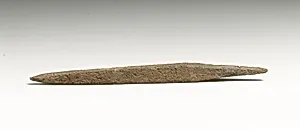
Awl
Unknown Artist
Medium
Bronze
Dimensions
Other: 4 7/8in. (12.4cm)
Classification
Bronzes
Culture
Cypriot
Department
Greek and Roman Art
Museum
Metropolitan Museum of Art, New York, NY
Credit
The Cesnola Collection, Purchased by subscription, 1874–76
Accession Number
74.51.5336
Rights
Public Domain
Art Historical Context
This slender bronze awl, measuring just under 5 inches, hails from ancient Cyprus, a vibrant island culture renowned for its mastery of metalworking during the Bronze Age As a practical tool likely used for piercing leather, wood, or even bone, it exemplifies the everyday implements that supported Cypriot craftsmanship and daily life. Though the artist and exact date remain unknown, such bronzes highlight the island's pivotal role in the Mediterranean bronze trade, where abundant copper deposits fueled advanced casting techniques. Bronze awls like this one were essential for artisans creating textiles, armor, or jewelry, reflecting Cyprus's position as a crossroads of Mycenaean, Egyptian, and Near Eastern influences. The medium itself—bronze, an alloy of copper and tin—underscores the technological prowess of Cypriot smiths, who produced tools and votive objects that circulated widely across the ancient world. Its simple, tapered form speaks to functional elegance, blending utility with the durability of a material prized for both tools and art. Acquired through The Cesnola Collection—assembled from 19th-century excavations on Cyprus—this awl now resides in the Metropolitan Museum of Art's Greek and Roman Art Department. It offers visitors a tangible glimpse into the uncelebrated hands of ancient workers, reminding us that even humble objects preserve profound stories of innovation and cultural exchange.