
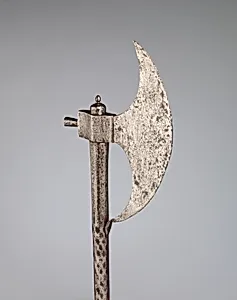
Ax (Berdiche or Balta)
Unknown Artist
ca. 1500
Medium
Steel
Dimensions
L. 36 1/4 in. (92.08 cm); W. 6 3/4 in. (17.0 cm); Wt. 3 lb. 1 oz. (1378 g)
Classification
Shafted Weapons
Culture
Syrian or Egyptian
Department
Arms and Armor
Museum
Metropolitan Museum of Art, New York, NY
Credit
Bequest of George C. Stone, 1935
Accession Number
36.25.1829
Rights
Public Domain
Art Historical Context
This imposing steel ax, known as a Berdiche or Balta hails from Syria or Egypt around 1500, a time when the Mamluk Sultanate dominated the region with its formidable cavalry and infantry forces. Measuring over 36 inches long and a hefty 3 pounds, this shafted weapon was designed for powerful, sweeping strikes in close combat, its broad blade (nearly 7 inches wide) capable of cleaving armor or foes with devastating force. Crafted entirely from steel, it exemplifies the metallurgical expertise of Islamic arms makers, who forged blades that balanced sharpness, durability, and weight for battlefield reliability. In the turbulent world of 15th- and 16th-century Near Eastern warfare, such axes were essential tools for soldiers, bridging the gap between swords and polearms. Whether wielded by Mamluk warriors defending against Ottoman incursions or in regional skirmishes, this piece reflects a fusion of practical engineering and martial artistry. Its anonymous creation underscores the guild traditions of the era, where master smiths prioritized function over fame. Today, this ax graces the Metropolitan Museum of Art's Arms and Armor Department, a bequest from George C. Stone in 1935. Visitors can marvel at its preserved heft and gleam, a tangible link to the clash of empires long past.