
Axe (Bullova)
Unknown Artist
18th–19th century
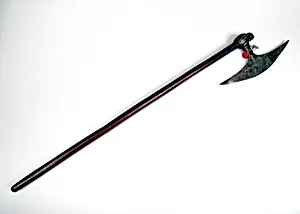
Medium
Steel, wood
Dimensions
H. 32 7/8 in. (83.5 cm); W. 5 in. (12.7 cm); Wt. 1 lb. 0.2 oz. (459.3 g)
Classification
Shafted Weapons
Culture
Indian
Department
Arms and Armor
Museum
Metropolitan Museum of Art, New York, NY
Credit
Bequest of George C. Stone, 1935
Accession Number
36.25.1813
Rights
Public Domain
Art Historical Context
This striking *Axe (Bullova)* hails from 18th–19th India, a period marked by shifting empires, regional kingdoms, and intense martial traditions. Crafted from steel and wood, it stands 32⅞ inches (83.5 cm) tall, spans 5 inches (12.7 cm) wide, weighs a nimble 1 lb. 0.2 oz. (459.3 g)—light enough for swift handling yet formidable in combat. As a shafted weapon in the Metropolitan Museum of Art’s Arms and Armor Department, it exemplifies the fusion of functionality and craftsmanship in Indian weaponry. The bullova, with its steel blade mounted on a wooden haft, highlights advanced metallurgical techniques of the time, where high-carbon steel was forged for sharp, durable edges suited to piercing armor or cleaving foes. These axes were essential tools for Indian warriors, from cavalry charges to infantry clashes, reflecting a culture where arms were both practical weapons and symbols of status and valor. Bequeathed to the Met in 1935 by collector George C. Stone, this artifact offers a tangible link to India’s dynamic history of warfare and artistry, inviting us to ponder the hands that wielded it amid the subcontinent’s turbulent centuries.