
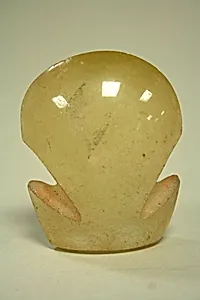
Axe Head
Unknown Artist
12th–5th century BCE
Medium
Rock crystal
Dimensions
Height 4-1/8 in.
Classification
Stone-Implements
Culture
Chavin
Department
Arts of Africa, Oceania, and the Americas
Museum
Metropolitan Museum of Art, New York, NY
Credit
Gift of Arthur M. Bullowa, 1989
Accession Number
1989.314.28
Rights
Public Domain
Art Historical Context
This exquisite rock crystal axe head, dating from the 12th to 5th century BCE hails from the Chavín culture of ancient Peru—one of the earliest Andean civilizations known for its sophisticated stonework and religious artistry. Standing at just 4-1/8 inches tall, this implement exemplifies the Chavín mastery of hard-stone carving, transforming a challenging material like clear quartz into a polished, translucent gem. Rock crystal, prized for its purity and luminosity, was far more than utilitarian; it symbolized spiritual power and otherworldly clarity in pre-Columbian societies. Chavín artisans, centered around monumental sites like Chavín de Huántar, developed advanced lapidary techniques using abrasives and precise grinding to shape such objects. While functional axes existed, this one's luxurious medium suggests a ceremonial role—perhaps wielded by priests in rituals invoking deities or ancestors. As a stone implement from the Arts of Africa, Oceania, and the Americas department at The Metropolitan Museum of Art, gifted by Arthur M. Bullowa in 1989, it offers a window into the Chavín worldview, where art bridged the earthly and divine. Today, this artifact captivates visitors with its timeless sparkle, reminding us of the ingenuity that flourished in the Andes millennia ago.