
Axe head
Unknown Artist
ca. late 3rd millennium BCE
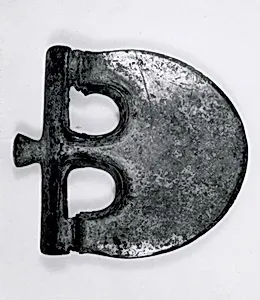
Medium
Bronze
Dimensions
4.65 x 4.21 in. (11.81 x 10.69 cm)
Classification
Metalwork-Implements
Period
Early Bronze Age
Department
Ancient Near Eastern Art
Museum
Metropolitan Museum of Art, New York, NY
Credit
Gift of Mrs. Khalil Rabenou, 1959
Accession Number
59.169
Rights
Public Domain
Art Historical Context
This bronze axe head, dating to the late 3rd millennium BCE the Early Bronze Age,ails from the Ancient Near East—a cradle of early civilizations like Mesopotamia and the Levant. Measuring just 4.65 x 4.21 inches, this tool exemplifies the period's leap in metallurgy, when artisans mastered bronze, an alloy of copper and, to create stronger, more durable implements than pure copper predecessors. Functioning as both a practical tool for woodworking or agriculture and a potential weapon in warfare or ritual, it reflects the era's growing technological sophistication and societal needs. The casting technique used here highlights skilled craftsmanship, as molten bronze was poured into molds to form precise, functional shapes—evidence of widespread trade networks supplying rare tin across vast regions. Today, gifted to the Metropolitan Museum of Art in 1959, this unadorned yet vital artifact invites us to ponder the daily lives of Bronze Age peoples, bridging the gap between ancient utility and modern appreciation for their innovative spirit.