
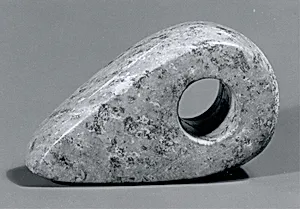
Axe head
Unknown Artist
3rd millennium BCE
Medium
Limestone or marble, pale green
Dimensions
4.4 x 8.5 in. (11.18 x 21.59 cm)
Classification
Stone-Implements
Period
Early Bronze Age
Department
Ancient Near Eastern Art
Museum
Metropolitan Museum of Art, New York, NY
Credit
Anonymous Gift, 1963
Accession Number
63.147.2
Rights
Public Domain
Art Historical Context
This pale green limestone or marble axe head, to the Early Bronze Age (3rd BCE), hails from the Ancient Near East—a cradle of early civilization in regions like Mesopotamia the Levant. Measuring just 4.4 x 8.5 inches, this compact yet robust stone implement exemplifies the craftsmanship of a time when societies were transitioning from stone to emerging metal technologies. Carved with precision, its smooth, polished surface highlights the skill of anonymous artisans who shaped durable tools from precious materials, often sourced from distant quarries. In the Early Bronze Age, axe heads like this served practical purposes in agriculture, woodworking, and warfare, but finer examples may have held ceremonial or status value, symbolizing power in burgeoning urban centers. The choice of pale green stone evokes the vibrant palettes of ancient palettes, possibly linking to symbolic associations with fertility or the divine in Near Eastern cultures. Though functional, its elegant form bridges utility and artistry, offering a tangible glimpse into daily life and technological innovation some 5,000 years ago. Today, this artifact graces the Metropolitan Museum of Art's Ancient Near Eastern Art collection, gifted anonymously in 1963—a quiet testament to the enduring allure of humanity's ancient ingenuity.