
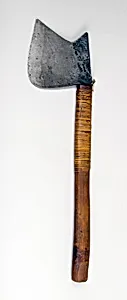
Axe ((Kalyo Kangyu)
Unknown Artist
19th century
Medium
Iron, wood, rattan
Dimensions
L. 21 3/8 in. (54.3 cm); W. 6 in. (15.2 cm); Wt. 1 lb. 7.7 oz. (671.9 g)
Classification
Shafted Weapons
Culture
Indian, Assam, Naga
Department
Arms and Armor
Museum
Metropolitan Museum of Art, New York, NY
Credit
Bequest of George C. Stone, 1935
Accession Number
36.25.1826
Rights
Public Domain
Art Historical Context
This striking 19th-century axe, known as a *Kalyo Kangyu*, hails from the Naga people of Assam in northeastern India. Crafted by an unknown artist, it the functional artistry of Naga warriors, blending iron for the blade, wood for the shaft, and rattan bindings for secure assembly. Measuring 21⅜ inches long and weighing just over a pound, its balanced design—6 inches wide at the blade—made it ideal for close combat in the region's rugged terrain. As a shafted weapon in Arms and Armor collection at The Metropolitan Museum of Art, *Kalyo Kangyu* reflects the Naga's renowned martial culture, where such tools served both practical warfare and symbolic roles in rituals. Naga craftsmanship emphasized durability and ergonomics, with the rattan wrapping providing flexibility and grip in humid environments. Entered the museum through the 1935 bequest of collector George C. Stone, it offers a window into 19th-century indigenous ingenuity. Today, this axe invites us to appreciate how everyday materials forged weapons that embodied cultural identity and resilience among Assam's hill tribes.