
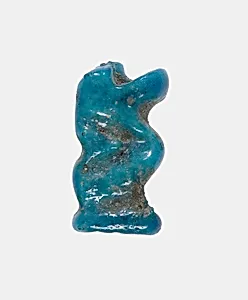
Baboon Amulet
Unknown Artist
ca. 1802–1450 B.C.
Medium
Faience
Classification
Amulet, baboon
Period
Late Middle Kingdom–Early New Kingdom
Department
Egyptian Art
Museum
Metropolitan Museum of Art, New York, NY
Credit
Rogers Fund and Edward S. Harkness Gift, 1922
Accession Number
22.1.1944n
Rights
Public Domain
Tags
Art Historical Context
Behold the **Baboon Amulet**, delicate treasure from ancient Egypt's Late Middle Kingdom to Early New Kingdom (ca. 1802–1450 B.C.), crafted during Dynasties 13–18. This small faience object—glazed ceramic renowned for its vibrant turquoise hue—exemplifies the era's mastery of this medium, which mimicked semiprecious stones likeis lazuli while being more accessible for mass production of ritual items. In Egyptian culture, baboons held profound symbolic power, often linked to divine wisdom and protection. Amulets like this were worn or carried as talismans, believed to safeguard the owner in daily life or the afterlife amid the turbulent transitions of these dynasties. The unknown artist's skillful molding captures the baboon's alert posture, highlighting faience's fine detail work through slip-casting and glazing techniques that endured millennia. Today, this piece graces the Metropolitan Museum of Art's Egyptian Art department, acquired through the Rogers Fund and Edward S. Harkness Gift in 1922. It invites us to ponder the ancient Egyptians' blend of artistry and spirituality, where even a humble baboon became a conduit for eternal magic.