
Bacchanaal met saters en putti
Giulio Carpioni (I), 1623 - 1679
About this artwork
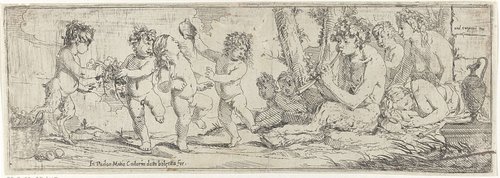
**Bacchanaal met saters en putti** by Carpioni (I), created during his active years from around 1623 to 1679, captures the exuberant spirit of classical mythology in a compact etching. This lively scene depicts a bacchanal—a raucous celebration honoring Bacchus, the Roman god of wine—with mischievous satyrs (half-human, half-goat woodland spirits) and playful putti (chubby, winged cherubs). Carpioni, a Venetian artist known for his intricate genre and mythological compositions, draws viewers into a whirlwind of revelry, blending fantasy with earthy vitality typical of 17th-century Baroque sensibilities. The artwork's etching medium is key to its charm and significance. Etching allowed artists like Carpioni to incise fine, expressive lines into a metal plate using acid, producing detailed prints that could be widely distributed. At just 106 mm high and 316 mm wide, its panoramic horizontal format evokes a frieze-like procession, ideal for displaying dynamic movement across the page. This technique highlights Carpioni's mastery of texture—from satyrs' furry limbs to putti's fluttering wings—making the print both intimate and immersive. In the Baroque era, such mythological etchings reflected Europe's enduring fascination with antiquity, serving as decorative treasures for collectors and evoking themes of indulgence and joy. Today, this piece offers a window into Carpioni's whimsical world, reminding us how prints democratized art for 17th-century audiences. (198 words)