
Bacchus en Ariadne
Unknown Artist
1474 - 1500
Medium
bronze (metal)
Dimensions
2.8; 3.7
Rights
Public Domain
About this artwork
height 2.8 cm x width 3.7 cm
Art Historical Context
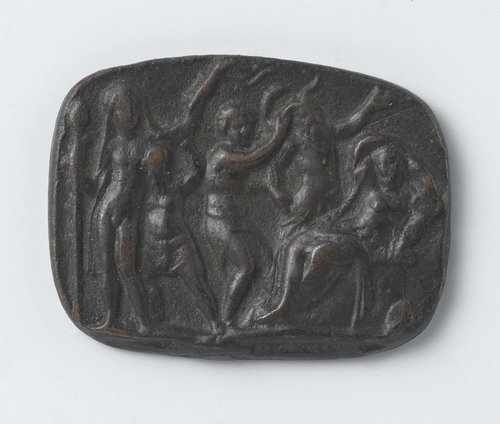
Nestled among the treasures of Renaissance artistry, *Bacchus en Ariadne* is a delicate bronze plaquette crafted by an unknown artist between 1474 and 1500. Measuring just 2.8 cm high by 3.7 cm wide, this diminutive metalwork captures the mythological encounter between Bacchus, the Roman god of wine and revelry (equivalent to Greek Dionysus), and Ariadne, the Cretan princess abandoned by Theseus on Naxos. Such intimate sculptures were prized collectibles during the late 15th century, evoking the era's fascination with classical antiquity amid the Northern Renaissance's blend of humanism and intricate craftsmanship. Bronze, valued for its durability and ability to hold fine details, was likely cast using the lost-wax technique—a sophisticated method where a wax model is encased in clay, melted out, and replaced with molten metal. This small scale suggests it was designed for private devotion or scholarly contemplation, perhaps adorning a collector's cabinet of curiosities. The choice of subject underscores the cultural revival of pagan myths, symbolizing themes of rescue, ecstasy, and divine love that resonated with Renaissance patrons exploring humanism beyond Christian iconography. Though the artist's identity remains elusive, *Bacchus en Ariadne* exemplifies the period's technical innovation and thematic depth, offering a window into how everyday enthusiasts engaged with the grandeur of ancient stories through portable, exquisite art.