
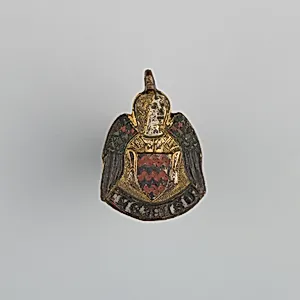
Badge or Harness Pendant
Unknown Artist
14th century
Medium
Copper, gold, enamel
Dimensions
H. 2 7/16 in. (6.2 cm); W. 1 3/4 in. (4.5 cm); Wt. 1 oz. (28.3 g)
Classification
Miscellaneous-Badges
Culture
Spanish
Department
Arms and Armor
Museum
Metropolitan Museum of Art, New York, NY
Credit
Rogers Fund, 1904
Accession Number
04.3.442
Rights
Public Domain
Tags
Art Historical Context
This exquisite 14th-century Spanish or harness pendant, crafted copper gilded with gold and enriched with enamel, measures just 2 7/16 inches high testament to the medieval artisan's skill in creating intricate finery on a small scale. Likely worn as a personal emblem or affixed to a horse's harness, it features delicate angels flanking a coat of arms, of divine protection and noble identity. Housed in the Metropolitan Museum of Art's Arms and Armor Department, it evokes the chivalric world of knights and tournaments. In medieval Spain, amid the Reconquista's fervor, such badges served practical and symbolic roles: identifying allegiance in battle, pilgrimage, or courtly display. Heraldry like the central coat of arms denoted family lineage or royal favor, while angels underscored the era's blend of piety and martial pride. These objects bridged personal devotion with public spectacle, often produced in workshops blending Islamic metalworking influences with Gothic Christian motifs. The enameling technique—fusing colorful glass powders onto the metal base and firing it to a glossy finish—ensured durability against wear from harness straps or badges pinned to clothing. This opulent yet functional medium highlights Spanish craftsmanship's prestige, making this pendant a rare survivor of everyday elite life. (198 words)