
Bag
Unknown Artist
1830–60
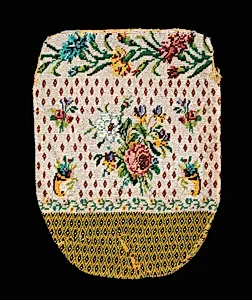
Medium
glass, linen
Classification
Bag
Culture
Mexican
Department
Costume Institute
Museum
Metropolitan Museum of Art, New York, NY
Credit
Brooklyn Museum Costume Collection at The Metropolitan Museum of Art, Gift of the Brooklyn Museum, 2009; Gift of Dwight W. Morrow, Jr., Constance Morrow Morgan, and Anne Morrow Lindbergh, 1956
Accession Number
2009.300.1909
Rights
Public Domain
Art Historical Context
This exquisite Mexican bag, crafted between 1830 and 1860, exemplifies the artistry of anonymous makers in 19th-century Mexico. Fashioned from delicate linen embroidered or adorned with glass beads, it served as a fashionable accessory for women, likely carried to social events or daily outings. The combination of materials highlights skilled handiwork: linen provided a sturdy yet refined base, while shimmering glass beads added elegance and light-catching sparkle, a technique popular in folk and high fashion alike during this era. Hailing from a period of political upheaval following Mexico's independence in 1821—including the Mexican-American War—the bag reflects cultural resilience and European-influenced tastes blending with local traditions. Such purses were status symbols, often featuring intricate patterns that showcased indigenous beading expertise passed down through generations. Displayed in the Costume Institute, it offers a glimpse into everyday luxury and the evolving role of accessories in Mexican society. A treasured piece from the Brooklyn Museum Costume Collection, now at The Metropolitan Museum of Art, it was gifted by the family of ambassador Dwight W. Morrow, including aviator Anne Morrow Lindbergh. This bag invites visitors to appreciate the quiet sophistication of overlooked crafts.