
Bag
Unknown Artist
7th century
Medium
Cotton, camelid hair
Dimensions
H. 10 1/4 x W. 14 5/8 x D. 5 in. (26 x 37.1 x 12.7 cm)
Classification
Textiles-Woven
Culture
Nasca
Department
Arts of Africa, Oceania, and the Americas
Museum
Metropolitan Museum of Art, New York, NY
Credit
The Michael C. Rockefeller Memorial Collection, Bequest of Nelson A. Rockefeller, 1979
Accession Number
1979.206.458
Rights
Public Domain
Art Historical Context
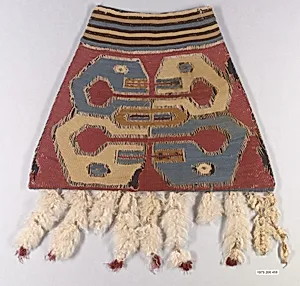
This exquisite woven bag hails from the Nasca of ancient Peru's south coast, dating to the 7th century—a time when Nasca society was renowned for its masterful textiles amid a flourishing tradition of ceramics and monumental geoglyphs. Crafted by an unknown artist, this practical yet artful object measures 10¼ x 14⅝ x 5 inches, the Nasca's skill in creating functional items that doubled as cultural expressions. Now part of The Metropolitan Museum of Art's Michael C. Rockefeller Memorial Collection, it offers a window into pre-Columbian life. Woven from cotton and camelid hair—likely from alpacas or vicuñas prized for their fine, durable fibers—the bag showcases advanced Andean weaving techniques. Nasca weavers achieved intricate patterns and vibrant colors through complex structures like double-cloth or brocading, often depicting mythical beings, animals, or geometric motifs symbolizing fertility, warfare, or cosmology. Though specific designs on this bag aren't detailed, such textiles were essential for storage, trade, or ritual use, underscoring the Nasca's technological ingenuity. In Nasca society, textiles held profound cultural value, serving as status symbols, offerings to deities, or exchanges in vast trade networks. This bag not only highlights their artistic legacy but also connects us to a world where everyday objects embodied spiritual and social narratives. A true treasure of woven artistry! (198 words)