
Bag
Unknown Artist
1810–30
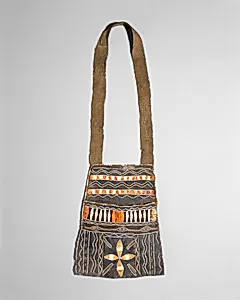
Medium
Native-tanned skin, quill, wool, pigment
Dimensions
H. 9 3/4 x W. 7 1/2 in. (24.8 x 19.1 cm)
Classification
Hide-Costumes
Culture
Potawatomi or Menominee
Department
Arts of Africa, Oceania, and the Americas
Museum
Metropolitan Museum of Art, New York, NY
Credit
Ralph T. Coe Collection, Gift of Ralph T. Coe Foundation for the Arts, 2011
Accession Number
2011.154.76
Rights
Public Domain
Art Historical Context
This exquisite bag, crafted by an unknown Potawatomi orominee artist between 0 and 1830, exemplifies the refined artistry of Great Lakes Native American communities. Made from native-tanned skin—likely deerhide—the pouch measures 9¾ x 7½ inches and features intricate decorations of porcupine quills, wool, and pigments. Quillwork, a hallmark technique of Woodland tribes, involved dyeing and flattening quills before sewing them into elaborate patterns, creating vibrant, textured designs that symbolized cultural stories, spiritual beliefs, or personal status. Such bags were practical yet ceremonial, often used to carry medicines, tobacco, or personal items during travels, hunts, or gatherings. The Potawatomi and Menominee peoples, inhabiting regions around the Great Lakes, were renowned for their quill embroidery, a skill passed down through generations that predated widespread beadwork influenced by European trade. This piece reflects a pivotal era before forced relocations like the Potawatomi Trail of Death in the 1830s, preserving traditional craftsmanship amid encroaching change. Today, housed in The Metropolitan Museum of Art's Arts of Africa, Oceania, and the Americas department (Ralph T. Coe Collection, 2011), it invites visitors to appreciate the ingenuity and resilience embedded in everyday objects turned masterpieces.