
Bagpiper
ca. 1745
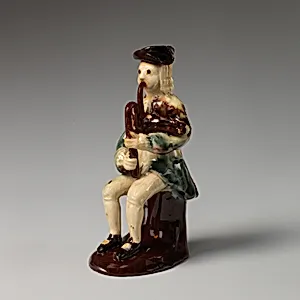
Medium
Lead-glazed earthenware
Dimensions
Height: 5 1/8 in. (13 cm)
Classification
Ceramics-Pottery
Culture
British, Staffordshire
Department
European Sculpture and Decorative Arts
Museum
Metropolitan Museum of Art, New York, NY
Credit
Gift of Mrs. Russell S. Carter, 1945
Accession Number
45.12.15
Rights
Public Domain
Tags
Art Historical Context
Step into the lively world of 18th Staffordshire pottery with *Bagpiper*, a charming lead-glazed earthenware crafted around 1745 by the Astbury-Whieldon. Standing just 5 1/8 inches tall, this petite sculpture captures a musician in mid-performance, bagpipes at the ready. Produced in the heart of Britain's pottery hub, Staffordshire, it exemplifies the era's innovative use of lead glazes over colorful slip decoration, which created vibrant, glossy finishes on affordable earthenware—making fine art accessible to middle-class homes. Astbury-Whieldon, a collaboration between potters from prominent local families, specialized in these whimsical "Staffordshire figures." Molded by hand and fired at low temperatures, they depicted everyday characters like musicians, reflecting Britain's folk traditions. The bagpiper evokes the lively ceilidhs and fairs where this rustic instrument thrived, symbolizing cultural pride amid the Industrial Revolution's rise. These pieces bridged decorative arts and mass production, foreshadowing giants like Josiah Wedgwood, who later partnered with Thomas Whieldon. Today, housed in the Metropolitan Museum of Art's European Sculpture and Decorative Arts collection (gift of Mrs. Russell S. Carter, 1945), *Bagpiper* delights visitors with its playful spirit and technical prowess—a snapshot of Georgian England's joyful vernacular art.