
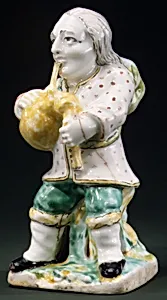
Bagpiper
ca. 1740–45
Medium
Soft-paste porcelain
Dimensions
Height: 5 1/2 in. (14 cm)
Classification
Ceramics-Porcelain
Culture
French, Villeroy
Department
European Sculpture and Decorative Arts
Museum
Metropolitan Museum of Art, New York, NY
Credit
The Jack and Belle Linsky Collection, 1982
Accession Number
1982.60.265
Rights
Public Domain
Tags
Art Historical Context
This charming porcelain figurine, *Bagpiper*, crafted at the French Villeroy factory around 1740–45, captures the lively spirit of 18th-century European decorative arts. Standing just 5½ inches tall, it depicts a musician playing the bagpipes, a nod to the whimsical genre scenes popularized by the renowned 17th-century etcher Jacques Callot, whose prints inspired many such porcelain models. Produced in soft-paste porcelain—a delicate, translucent material blending clay, glass frit, and white ash that was a French innovation before true hard-paste porcelain dominated—the piece exemplifies the technical finesse of early European ceramics. Villeroy, associated with the Mennecy factory near Paris, specialized in these petite figural groups during the Rococo era, when opulent tabletops and cabinets brimmed with playful vignettes of everyday life, musicians, and performers. Soft-paste allowed for intricate molding and vibrant overglaze enameling, bringing Callot's dynamic compositions into three dimensions for affluent collectors. Bagpipers, evoking folk traditions and festive gatherings, added a touch of rustic joy to refined interiors. Today, housed in The Metropolitan Museum of Art's European Sculpture and Decorative Arts Department as part of The Jack and Belle Linsky Collection, *Bagpiper* highlights the fusion of printmaking and porcelain artistry, bridging centuries of cultural delight in music and craftsmanship.