
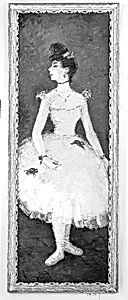
Baguette molding (pair with 1975.1.2508)
Unknown Artist
1740–50
Medium
Pine back frame with oak upper moldings.
Dimensions
Overall: 78 1/16 × 30 1/8 in. (198.2 × 76.5 cm) Sight: 72 7/16 × 24 3/8 in. (184 × 61.9 cm) Rabbet: 74 7/16 × 26 5/16 in. (189 × 66.8 cm)
Classification
Frames
Culture
French
Department
Robert Lehman Collection
Museum
Metropolitan Museum of Art, New York, NY
Credit
Robert Lehman Collection, 1975
Accession Number
1975.1.2509
Rights
Public Domain
Art Historical Context
This elegant pair of baguette moldings, crafted in France between 1740 and 1750, exemplifies the refined ornamental frames of the Louis XV era. Baguette frames, named for their slender, stick-like profile, were a hallmark of Rococo interiors, designed to subtly enhance paintings without overwhelming them. Produced during a time when French decorative arts flourished under royal patronage, these frames would have graced aristocratic salons, harmonizing with gilded furniture and pastel-colored walls. Constructed with a pine back frame for stability and oak upper moldings for durability and fine carving, they showcase 18th-century woodworking techniques. The oak allowed for precise, delicate profiles that caught the light, adding depth and movement. Measuring approximately 78 by 30 inches overall, their sight size of about 72 by 24 inches suggests they framed a portrait or landscape painting, common in period collections. Acquired for the Robert Lehman Collection in 1975 and now housed in The Metropolitan Museum of Art, these frames highlight the Lehman's passion for European decorative arts. They offer a glimpse into the craftsmanship that elevated everyday art display into high fashion, reminding us how frames were once integral to a painting's narrative.