
Bai tou weng
1789
Medium
Woodblock print; ink and color on paper
Dimensions
10 x 14 7/8 in. (25.4 x 37.8 cm)
Classification
Prints
Culture & Period
Japan · Edo period (1615–1868)
Department
Asian Art
Museum
Metropolitan Museum of Art, New York, NY
Credit
Rogers Fund, 1918
Accession Number
JP536
Rights
Public Domain
Tags
Art Historical Context
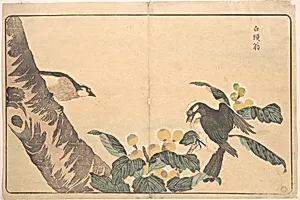
**Bai tou weng** (1789) by Kuwagata Keis is a delicate woodblock print from Japan's Edo period (1615–1868), capturing the beauty of nature through a white-headed bird perched amid fruit and leaves. This intimate scene, measuring just 10 x 14⅞ inches, exemplifies *kachō-e* (bird-and-flower prints), a popular subset of *ukiyo-e*—the "pictures of the floating world" that celebrated ephemeral pleasures. Keisai, a skilled printmaker influenced by the vibrant urban culture of Edo (modern Tokyo), masterfully rendered the bird's feathers, the glossy fruit, and lush foliage with fine lines and subtle color gradients. Printed using ink and color on paper, the work highlights the ingenuity of woodblock techniques: artisans carved intricate blocks for each color layer, allowing affordable production and wide distribution among merchants and commoners. This medium democratized art, turning homes into mini-galleries during a time of relative peace and prosperity under the Tokugawa shogunate. Housed in the Metropolitan Museum of Art's Asian Art Department (Rogers Fund, 1918), *Bai tou weng* invites viewers to appreciate Japan's reverence for nature's harmony. Its precise details evoke a meditative calm, reminding us how Edo artists transformed everyday motifs into timeless poetry.