
Bai tou weng
1789
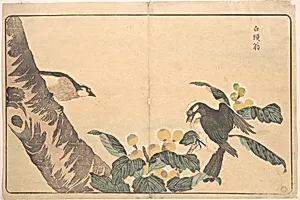
Medium
Woodblock print; ink and color on paper
Dimensions
10 x 14 7/8 in. (25.4 x 37.8 cm)
Classification
Prints
Culture & Period
Japan · Edo period (1615–1868)
Department
Asian Art
Museum
Metropolitan Museum of Art, New York, NY
Credit
Rogers Fund, 1918
Accession Number
JP536
Tags
Art Historical Context
**Bai tou weng** (1789) by Kuwagata Keis is a delicate woodblock print from Japan's Edo period (1615–1868), capturing the beauty of nature through a white-headed bird perched amid fruit and leaves. This intimate scene, measuring just 10 x 14⅞ inches, exemplifies *kachō-e* (bird-and-flower prints), a popular subset of *ukiyo-e*—the "pictures of the floating world" that celebrated ephemeral pleasures. Keisai, a skilled printmaker influenced by the vibrant urban culture of Edo (modern Tokyo), masterfully rendered the bird's feathers, the glossy fruit, and lush foliage with fine lines and subtle c...