
Baluster
Unknown Artist
first half 18th century
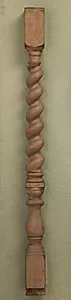
Medium
Walnut
Dimensions
Height: 32 1/4 in. (81.9 cm)
Classification
Woodwork
Culture
British
Department
European Sculpture and Decorative Arts
Museum
Metropolitan Museum of Art, New York, NY
Credit
Rogers Fund, 1932
Accession Number
32.106.51
Rights
Public Domain
Art Historical Context
Step into the refined world of early 18th-century British architecture with this elegant walnut baluster, crafted by an unknown artisan during the first half of the Georgian era (circa 1714–1760). Standing at 32¼ inches tall, this slender, vase-shaped post exemplifies the period's love for symmetrical, classical-inspired designs in interior furnishings and staircases. Balusters like this supported handrails on grand staircases or balconies, blending utility with ornamental grace in the homes of the emerging middle and upper classes. Carved from rich walnut—a prized hardwood valued for its durability, fine grain, and warm, chocolate-brown patina—the baluster showcases masterful lathe-turning techniques. Woodturners used precision tools to create its rhythmic swells and contours, highlighting the artisanal skill of British woodworkers at a time when craftsmanship rivaled continental Europe. Such pieces reflect the era's fusion of Queen Anne and early Georgian styles, influenced by Palladian architecture and a growing taste for understated elegance over Baroque excess. Acquired through the Rogers Fund in 1932, this baluster now graces the Metropolitan Museum of Art's Department of European Sculpture and Decorative Arts. It offers visitors a tactile glimpse into Britain's woodworking heritage, reminding us how everyday architectural elements embodied cultural sophistication and technical prowess.