
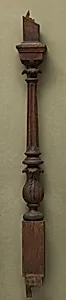
Baluster
Unknown Artist
ca. 1693
Medium
Oak
Dimensions
Height: 31 in. (78.7 cm)
Classification
Woodwork
Culture
British
Department
European Sculpture and Decorative Arts
Museum
Metropolitan Museum of Art, New York, NY
Credit
Gift of Acton Surgey Ltd., 1932
Accession Number
32.123.1
Rights
Public Domain
Art Historical Context
This elegant oak baluster crafted around 1693 by an unknown British artisan, stands as a fine example of late 17th-century English woodwork. Measuring 31 inches in height, it features the characteristic vase-like form with a swelling bulb and tapering neck, designed to support handrails in grand staircases or balconies. Oak, a staple of British craftsmanship, was prized for its and rich grain, making it ideal for architectural elements that blended functionality with ornamentation. Dating to the William and Mary period, this baluster reflects the refined tastes of England's Restoration era, where turned woodwork showcased virtuoso lathe techniques. Artisans skillfully shaped the dense oak on a lathe, achieving smooth curves and precise proportions that evoked classical influences while adapting to domestic interiors. Such pieces adorned the homes of the emerging merchant class and gentry, symbolizing status and the era's shift toward more graceful, less exuberant Baroque designs. A generous gift to the Metropolitan Museum of Art from Acton Surgey Ltd. in 1932, this baluster offers visitors a tangible link to Britain's decorative arts heritage, highlighting the anonymous makers whose skill elevated everyday architecture into art.