
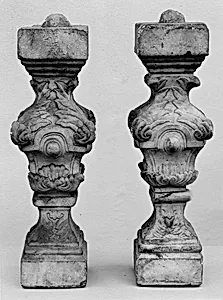
Baluster
Unknown Artist
17th–18th century
Medium
Marble
Dimensions
H. 26 in. (66 cm); W. 8 in. (20.3 cm)
Classification
Sculpture
Culture
China
Department
Asian Art
Museum
Metropolitan Museum of Art, New York, NY
Credit
Gift of James R. Sutton, 1883
Accession Number
83.19.4
Rights
Public Domain
Tags
Art Historical Context
This elegant marble baluster, crafted in China during the 17th18th century, exemplifies the refined architectural sculpture of the late Ming to early Qing dynasties. at 26 inches tall and 8 inches wide, its vase-like form—typical of balusters—would have supported railings on grand staircases, bridges, or garden pavilions in imperial palaces or elite estates. Carved from high-quality marble, it showcases precision and balance prized in Chinese stonework, where smooth curves and subtle fluting created both structural support and visual harmony. In Chinese architecture, balusters like this were more than functional; they symbolized prosperity and imperial authority, often adorning sacred or ceremonial spaces. Marble, quarried from regions like Yunnan, was a luxurious choice reserved for monumental projects, highlighting the era's advanced quarrying and polishing techniques. Its enduring white stone has preserved intricate details over centuries, offering a glimpse into the opulent built environment of pre-modern China. Generously gifted to the Metropolitan Museum of Art in 1883 by James R. Sutton, this piece now invites visitors to appreciate the artistry behind everyday architectural elements, bridging the gap between sculpture and design in Asian art traditions.