
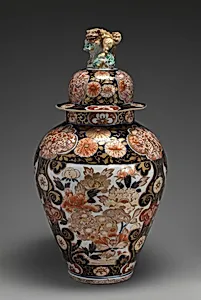
Baluster-shaped vase
Unknown Artist
ca. 1690–1720
Medium
Porcelain
Dimensions
Overall: 23 1/2 × 12 1/4 × 13 in. (59.7 × 31.1 × 33 cm); Width at base: 6 in. (15.2 cm); Weight: 13 lb. (5.9 kg)
Classification
Ceramics-Porcelain-Export
Culture
Japanese, for export market (Hizen ware, Imari type)
Department
European Sculpture and Decorative Arts
Museum
Metropolitan Museum of Art, New York, NY
Credit
Gift of Jane Hardesty Poole, 2019
Accession Number
2019.257.6a, b
Rights
Public Domain
Art Historical Context
This magnificent baluster-shaped vase, around 1690–1720 in Japan's Hizen province (now Saga Prefecture), exemplifies the renowned Imari porcelain produced at Arita kilns for the export market. Standing nearly two feet tall and weighing a substantial 13 pounds, its swelling form—tapering from a wide base to a flared neck—reflects a shape inspired by European metalwork, tailored to appeal to Western tastes. As a product of the Edo period, when Japan tightly controlled foreign trade through the Dutch East India Company at Nagasaki, this vase represents the height of Japan's porcelain export industry. Imari ware, characterized by its vibrant overglaze enamels in iron-red, cobalt blue, and gold, revolutionized global ceramics. These pieces flooded European markets, adorning grand interiors and inspiring factories like Meissen in Germany to imitate their bold designs. Housed today in the Metropolitan Museum of Art's Department of European Sculpture and Decorative Arts—a testament to its cross-cultural impact—this vase highlights how Japanese artisans blended traditional techniques, such as high-fired porcelain bodies and intricate hand-painted motifs, with innovative adaptations for international collectors. Fun fact: At over 23 inches high, this hefty vessel would have been a prized centerpiece, symbolizing luxury and exotic allure in 18th-century European homes. A gift to the Met in 2019, it invites us to appreciate the global dialogues sparked by early modern trade.