
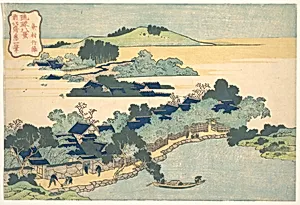
琉球八景 粂村竹籬|Bamboo Hedge at Kumemura (Kumemura chikuri), from the series Eight Views of the Ryūkyū Islands (Ryūkyū hakkei)
ca. 1832
Medium
Woodblock print; ink and color on paper
Dimensions
9 7/8 x 14 5/8 in. (25.1 x 37.1 cm)
Classification
Prints
Culture & Period
Japan · Edo period (1615–1868)
Department
Asian Art
Museum
Metropolitan Museum of Art, New York, NY
Credit
Henry L. Phillips Collection, Bequest of Henry L. Phillips, 1939
Accession Number
JP2914
Rights
Public Domain
Tags
Art Historical Context
Step into the vibrant world of Katsushika Hokusai's *Bamboo Hedge atemura (Kumemura chikuri)*, a captivating woodblock print from his series *Eight Views of Ryūkyū IslandsRyūkyū hakkei)*, created around 1832 during Japan's Edo period (1615–1868). Hokusai, the legendary master of ukiyo-e—"pictures of the floating world"—is renowned for his dynamic landscapes and innovative compositions, like the iconic *Great Wave*. Here, he turns his gaze to the distant Ryūkyū Islands (modern-day Okinawa), evoking an exotic paradise through ink and color on paper, measuring just 9⅞ × 14⅝ inches. The scene unfolds at Kumemura, a historic village in the Ryūkyūs famed for its Chinese-influenced scholars and architecture. Towering bamboo hedges frame humble houses nestled amid lush landscapes, with boats dotting nearby waters—a serene blend of human habitation and nature's embrace. This intimate *ōban* format print showcases Hokusai's genius in layering colors via the woodblock process, where intricate carved blocks were inked and pressed to create vivid, affordable art for everyday viewers. Part of a series echoing traditional Chinese "eight views" motifs, this work highlights Edo Japan's fascination with Ryūkyū's unique culture as a tributary kingdom bridging China and Japan. On view in the Metropolitan Museum of Art's Asian Art collection (Henry L. Phillips Bequest, 1939), it invites us to ponder distant shores through Hokusai's masterful lens.
About the Artist
Katsushika Hokusai · 1760–1849
Katsushika Hokusai (1760-1849) stands as one of history's most influential artists, a Japanese master who revolutionized the ukiyo-e woodblock print tradition and profoundly shaped Western art. Born in the Katsushika district of Edo (modern-day Tokyo) to an artisan family, Hokusai lived through nearly nine decades of extraordinary creative evolution, adopting over thirty different artistic names t...