
芥子园画譜 竹谱|“Bamboo” section, from the Mustard Seed Garden Manual of Painting
1817 (Jiaqing 2nd edition)
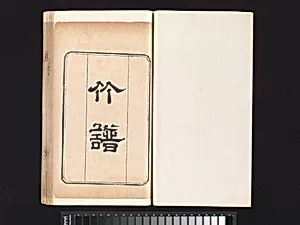
Medium
Woodblock-printed book; ink and color on paper
Dimensions
After conservation: 11 3/16 × 6 7/8 × 1/2 in. (28.4 × 17.5 × 1.3 cm)
Classification
Illustrated Books
Culture & Period
China · Qing dynasty (1644–1911), Jiaqing period (1796–1820)
Department
Asian Art
Museum
Metropolitan Museum of Art, New York, NY
Credit
Gift of Anita V. Beenk, 2016
Accession Number
2016.751.5
Rights
Public Domain
Art Historical Context
Step into the refined world of Qing dynasty artistry with the “Bamboo” section from theMustard Seed Garden Manual Painting* (芥子园画譜), compiled by Wang Gai Published in its Jiaqing second edition in 1817, this woodblock-printed book on ink and color paper captures the elegance of bamboo—a timeless symbol of resilience and integrity in Chinese culture. Measuring a compact 11 3/16 × 6 7/8 × 1/2 inches after conservation, it belongs to the Metropolitan Museum of's Asian Art collection, gifted by Anita V. Beenk in 2016. This illustrated manual, from the Qing dynasty's Jiaqing period (1796–1820), served as an essential guide for aspiring artists, offering precise models for rendering bamboo's graceful stalks, leaves, and joints. The woodblock technique allowed for vibrant, reproducible color and ink illustrations, democratizing classical painting methods rooted in earlier traditions. Its structured lessons emphasized brushwork rhythms that evoke bamboo's swaying vitality, blending technical instruction with poetic harmony. Widely influential across East Asia, the *Mustard Seed Garden* shaped generations of painters, preserving literati ideals amid imperial splendor. Leaf through its pages to appreciate how everyday elegance inspired profound artistic mastery.
About the Artist
Wang Gai · 1645–1710
Wang Gai (王概, 1645–1710), a prominent Qing dynasty painter from Xiushui in Zhejiang province, established himself in the vibrant cultural hub of Nanjing, where he flourished from around 1677 to 1705. Born into a scholarly family—his father-in-law was the renowned writer Li Yu (1611–1680)—Gai trained under the master Gong Xian (1619–1689), one of the Eight Masters of Jinling, adopting his robust la...