
Band
Unknown Artist
16th century
Medium
Silk and linen
Dimensions
L. 13 x W.(with fringe) 4 1/4 inches (33.0 x 10.8 cm)
Classification
Textiles-Woven
Culture
Italian
Department
European Sculpture and Decorative Arts
Museum
Metropolitan Museum of Art, New York, NY
Credit
Rogers Fund, 1909
Accession Number
09.50.268
Rights
Public Domain
Art Historical Context
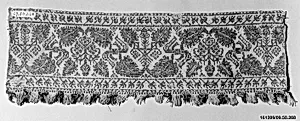
This delicate 16th-century Italian, woven from luxurious silk and linen, exemplifies the Renaissance mastery of textile arts. Measuring just 13 inches long 4¼ inches wide (including its fringe), this narrow strip was likely used as a decorative trim for garments, ecclesiastical vestments, or furnishings. Acquired through the Rogers Fund in 1909, it now graces the Metropolitan Museum of Art European Sculpture and Decorative collection, highlighting Italy's pivotal role in Europe's textile trade. During the 16th century, Italian weavers—centered in cities like Lucca and Venice—pioneered sophisticated techniques that blended shimmering silk with sturdy linen for durability and opulence. Silk, imported via the Silk Road and refined locally, symbolized wealth and status, often adorning nobility and clergy. The woven structure allowed for intricate patterns (though specifics here are undocumented), making such bands prized exports across Europe. As a survivor of this era, the band offers a tactile glimpse into Renaissance daily life and devotion, where textiles were both functional art and cultural currency. Visitors can appreciate how these modest pieces wove together commerce, craftsmanship, and beauty in Italy's Golden Age.