
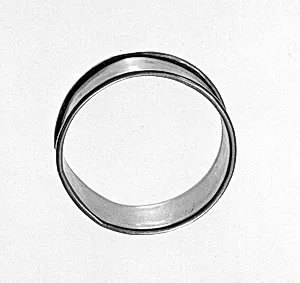
Band
Unknown Artist
ca. 14th–13th century BCE
Medium
Gold
Dimensions
0.59 in. (1.5 cm)
Classification
Metalwork-Ornaments
Culture & Period
Hittite · Hittite Empire
Department
Ancient Near Eastern Art
Museum
Metropolitan Museum of Art, New York, NY
Credit
Gift of Norbert Schimmel Trust, 1989
Accession Number
1989.281.13
Rights
Public Domain
Art Historical Context
This delicate gold band, crafted by an unknown Hittite artisan around the 14th–13th century BCE, offers a glimpse into the splendor of the Hittite Empire, a Bronze Age powerhouse in ancient Anatolia (modern-day Turkey). During this period, the Hittites dominated vast territories, forging diplomatic alliances and military might while excelling in metallurgy. Such small ornaments, measuring just 0.59 inches (1.5 cm) wide, were likely worn by elites as finger rings, armlets, or hair bands, symbolizing status and wealth in a society where gold evoked divine favor and royal prestige. The band's creation highlights Hittite mastery of goldworking techniques, including hammering thin sheets into precise forms and possibly granulation or repoussé for texture—methods that showcased their technological prowess amid trade networks spanning Egypt and Mesopotamia. As a rare survivor from this era, it reflects the empire's cultural fusion of local traditions with influences from neighboring powers, underscoring the Hittites' role in bridging ancient Near Eastern civilizations. Today, this treasure from the Norbert Schimmel Trust (acquired by The Metropolitan Museum of Art in 1989) invites us to marvel at the enduring allure of ancient craftsmanship, a tiny testament to a lost world's grandeur.